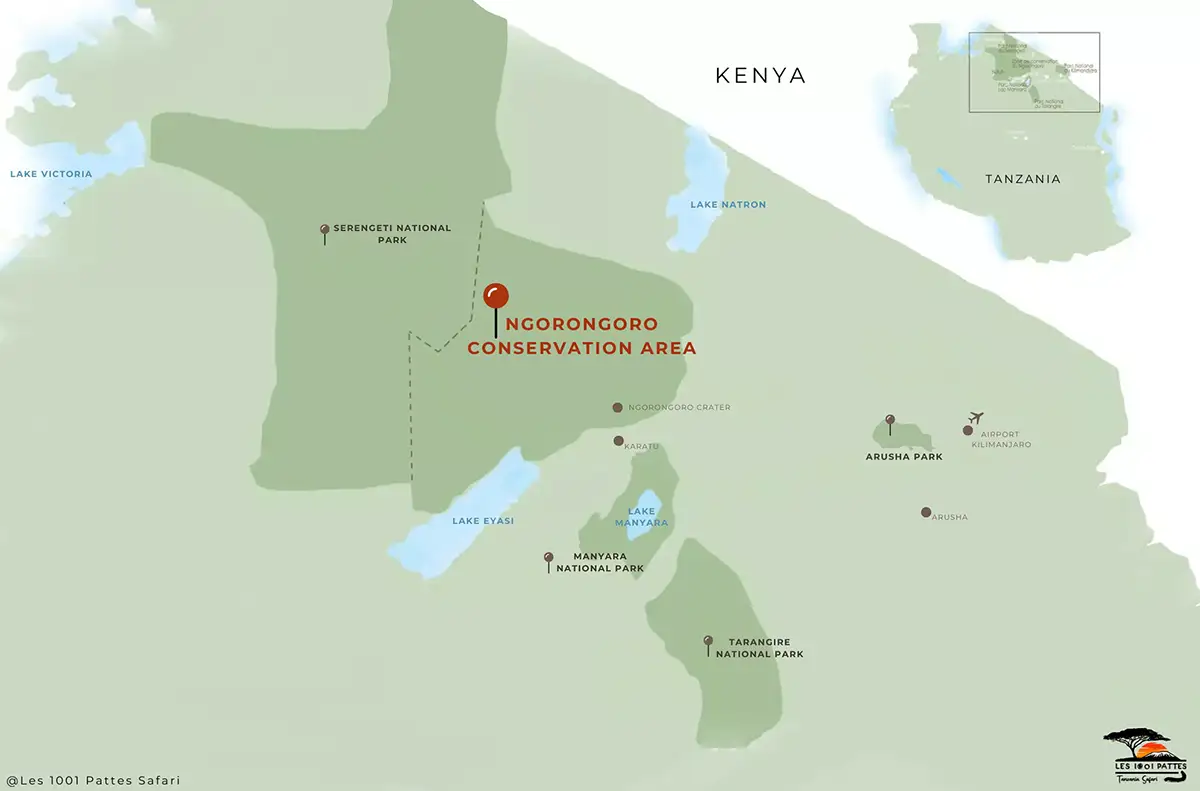
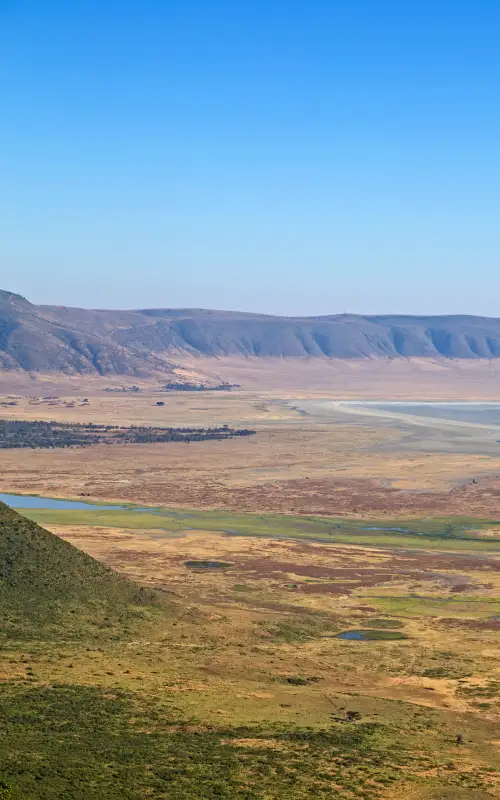
Discover the Ngorongoro Crater, an ancient extinct volcano whose summit collapsed to form a spectacular crater over 20 km in diameter. Located just 30 minutes from Karatu (14 km) and 1 hour 45 minutes from Serengeti National Park (65 km), the crater covers an area of 326 km² in the heart of an 8,800 km² conservation area.
The Ngorongoro Crater is home to exceptional wildlife, with more than 25,000 animals in the area, including lions, elephants, rhinos, buffalos and leopards. Its flora is equally impressive, ranging from lush forests to vast green grasslands, providing an ideal habitat for unique biodiversity.
Since 1979, the site has been listed as a UNESCO World Heritage Site, highlighting its ecological and cultural importance. Visitors can enjoy breathtaking views from the crater’s heights and enjoy an unforgettable experience of immersion in African nature.
Whether you are a nature lover, a keen photographer or an adventurer seeking thrills, the Ngorongoro Crater is a must-see destination on any trip to Tanzania.
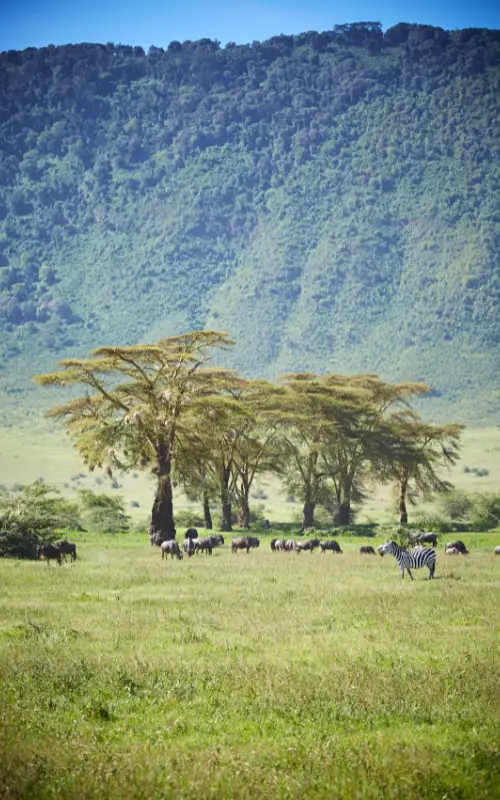
Exceptional wildlife
The Ngorongoro Crater is home to an incredibly rich fauna, with more than 25,000 animals. You will find, among others:
Large predators: lions, leopards and hyenas.
Iconic herbivores: elephants, buffalo, black rhinos, zebras and various species of gazelles.
Birds: over 500 species, including flamingos around the seasonal lakes.
Flora and landscapes
The vegetation is equally diverse, offering unique landscapes:
Green meadows and savannahs ideal for wildlife viewing.
High-altitude forests and wetlands, home to rare biodiversity.
Panoramic views from the crater rim, perfect for photographers and nature lovers.
Practical information
- Location: Arusha Region, Tanzania, near Serengeti and Karatu.
- Altitude: between 1,800 and 2,450 metres.
- Climate: mild temperatures (15–25 °C) with two rainy seasons (March–May and November–December).
- Recommended equipment: binoculars, camera, comfortable shoes, sun cream.