All it takes is a roar carried on the evening breeze for the entire camp to fall silent. In Tanzania, the lion is not just the greatest of predators: it is a presence, a silence that speaks volumes, a golden gaze that seems to know all the secrets of the savanna. A symbol of strength and royalty for millennia, it continues to fascinate as much as it intrigues, as its social life and behavior remain complex and surprising. Let’s set out to encounter this iconic species, from the Serengeti to Ngorongoro and Tarangire.
A Social Structure Unique in the World of Felines
Unlike most big cats, which are solitary by nature, the lion has made a unique evolutionary choice: to live in a community. This social structure, known as a “pride,” is one of the species’ most fascinating characteristics.
A pride typically consists of between 4 and 15 individuals: several related lionesses (sisters, mothers, daughters), their cubs, and one or two dominant males—often brothers or allies—who have come to defend the territory. This matriarchal structure is based on a delicate balance: the lionesses, bound by blood, remain together for their entire lives and form the stable core of the group, while the males, who are more nomadic, retain their dominant position for only a few years before being driven out by younger, stronger rivals.
This group lifestyle is by no means random: it offers increased protection against hyenas and other predators, better defense of the territory, and, above all, a formidably effective hunting strategy. For it is indeed the lionesses—lighter, more agile, and with greater stamina—who carry out the bulk of the hunting—often in a coordinated formation, discreetly encircling their prey before the final assault.
Surprisingly Contrasting Personalities
We often imagine the lion as a brute force, driven solely by instinct. The reality is far more nuanced. Field observations, particularly in the Serengeti where certain prides have been tracked for decades, reveal very distinct individual temperaments.
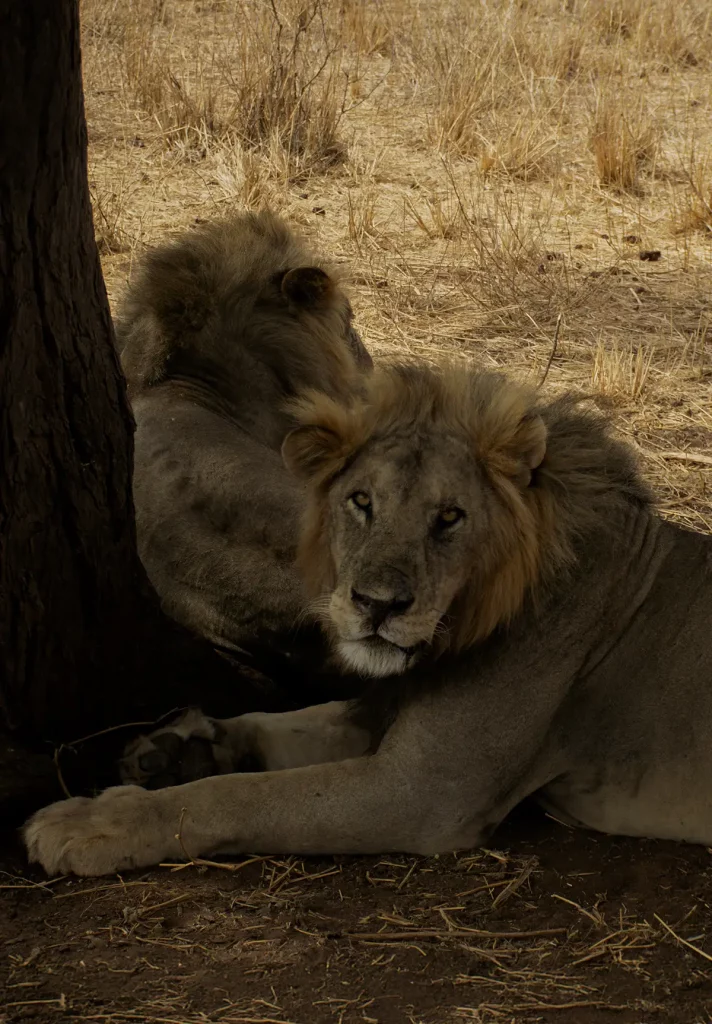
Some males display spectacular courage, not hesitating to confront buffalo or challenge much younger rivals to protect their territory. Others, more cautious, prefer to bide their time and wait for the right moment. Among lionesses, the differences are just as striking: some prove to be reckless and daring hunters, while others are remarkably patient mothers, watching over their cubs while the rest of the pride goes out to hunt.
What particularly strikes visitors on a safari is the striking contrast between these moments of absolute rest—a lion can sleep up to 18 to 20 hours a day! — and the sudden bursts of energy and power during a hunt or a territorial confrontation. This alternation between indolence and intensity is part of the animal’s mystery and charm: you think you know it when it’s sleeping in the shade of an acacia tree, and the next moment, it reveals its full power.
The Lion Cubs: Innocence in the Heart of the Savannah
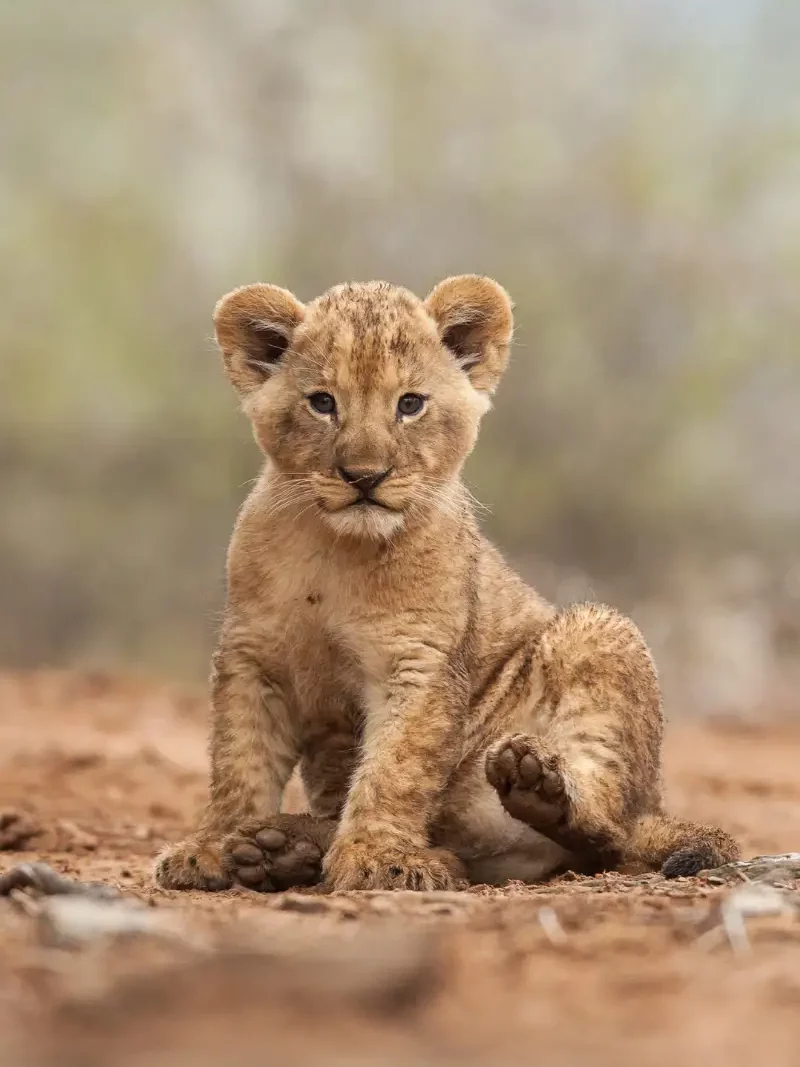
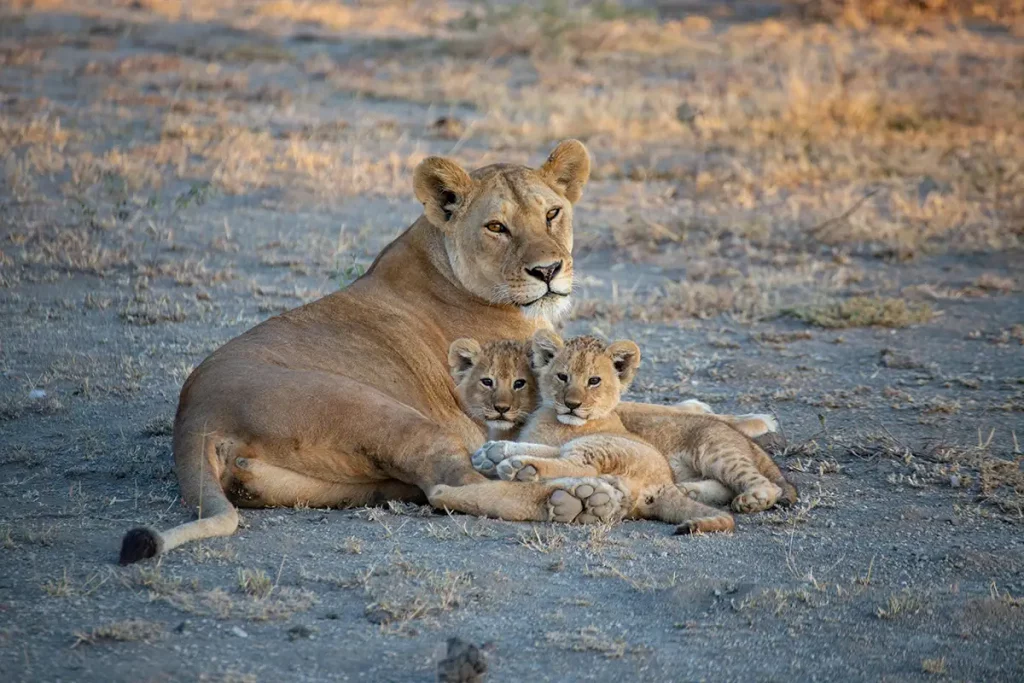
Nothing moves visitors more than a litter of lion cubs playing under their mother’s watchful eye. Born blind and completely dependent, they weigh only one to two kilograms at birth and remain hidden during their first few weeks, safe from predators.
Once this period is over, the cubs join the pride and grow up as part of a true family. The lionesses collectively participate in raising them, while play allows the cubs to gradually learn hunting and fighting techniques.
The reality, however, remains harsh: before the age of one, more than 60% of lion cubs do not survive, falling victim to predators, disease, or sometimes infanticide when new males join the pride.
A Distribution Shaped by Tanzania’s Major Ecosystems
Tanzania is home to one of the highest densities of lions in the world, distributed mainly across four major ecosystems, each offering a different wildlife viewing experience.
The Serengeti, with its vast grassy plains stretching as far as the eye can see, is home to the country’s largest lion population—estimated at between 3,000 and 4,000 individuals. It is here that lion prides sometimes reach impressive sizes, taking advantage of the abundance of prey provided by the Great Migration.
The Ngorongoro Crater, meanwhile, presents a fascinating case study for scientists: isolated within this steep-walled caldera, the lionesses form a nearly closed population that has been particularly well documented since the 1960s.
Tarangire, famous for its majestic baobabs, offers a different hunting ground where lions have developed techniques adapted to a more wooded environment, sometimes even hunting in the trees—a rare behavior observed in some individuals in the region.
Finally, Lake Manyara is world-renowned for its tree-climbing lions, capable of hoisting themselves into the branches of acacia trees—a behavior whose exact origin remains a subject of debate among researchers: is it to escape the heat on the ground, to avoid insects, or simply to secure a better vantage point?
How Does the Lion Perceive Us?
This is undoubtedly one of the most fascinating—and least known—aspects of this species. Contrary to popular belief, lions do not naturally view humans as prey. Their behavior toward visitors in safari vehicles best illustrates this: most lions accustomed to the presence of vehicles perceive them as a neutral presence—neither threatening nor interesting—and go about their business without paying them any attention—provided, of course, that the occupants remain silent and inside the vehicle.
This relative tolerance, however, should never be confused with docility. The lion remains a profoundly wild animal, endowed with a remarkable memory and keen observational skills. It can clearly distinguish familiar sights—such as vehicles and experienced guides—from unusual situations, and adapts its behavior accordingly. It is precisely this social intelligence, combined with a raw power that is never concealed, that has always fueled the nearly universal respect that humanity holds for this animal.
The Lion, the Eternal Symbol of Courage and Majesty
From ancient Egypt to European coats of arms, and African mythologies, the lion holds a special place in the human imagination. This status is well-deserved: everything about its appearance and behavior exudes nobility. Its mane, which darkens and thickens with age and testosterone levels, serves as a visual signal of strength and maturity, used both to intimidate rivals and to attract lionesses.
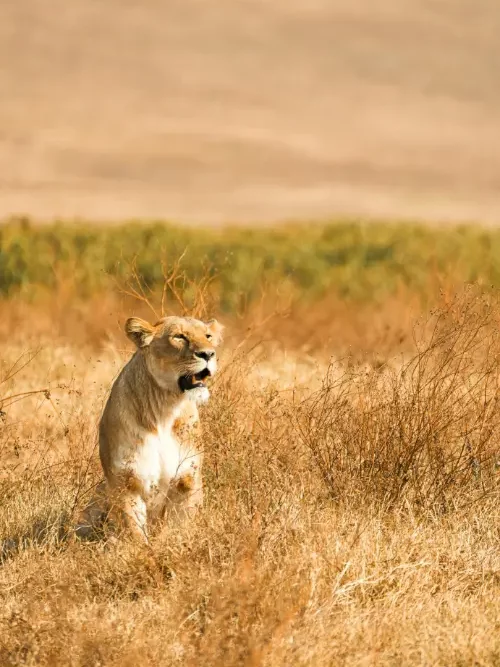
The lion’s roar, audible up to 8 kilometers away on a quiet night, is undoubtedly its most spectacular manifestation. Far from being a simple cry, it is a language in its own right: a territorial assertion, a rallying call among members of the same pride, or a declaration of intent toward a rival. Hearing this sound echo through the heart of the African night, from your tent or lodge, remains one of the most intense memories a safari in Tanzania can offer—a thrill of authenticity that reminds you, more than any other moment, that you are indeed in the king’s domain.